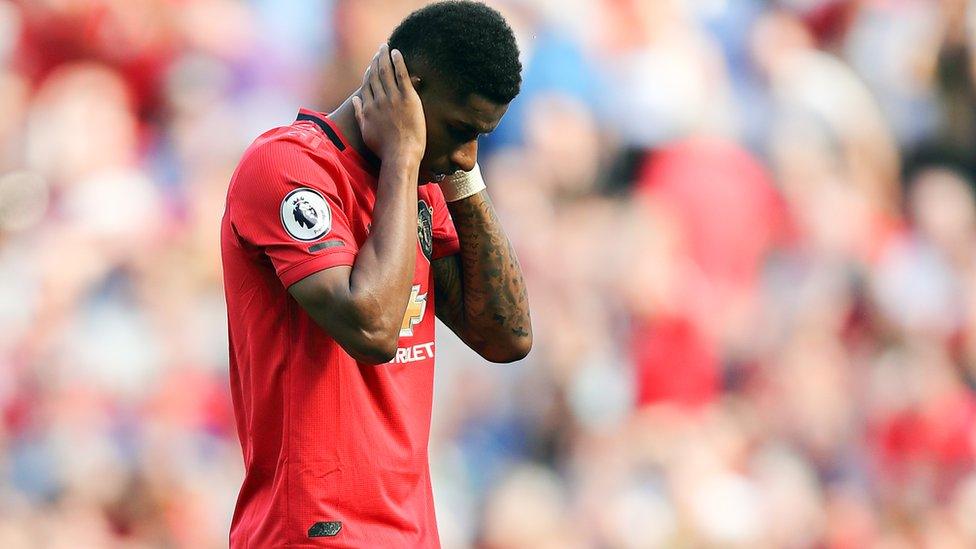
After the Euro 2020 final, three England players: Marcus Rashford, Bukayo Saka and Jadon Sancho became the target of widespread racist abuse on social media. As these abuses increased and were taken to an extreme level, 11 people who posted racist comments on these players’ social media posts were arrested under investigation of a hate crime (Lee, 2021). Football is often seen as a global sport that brings people from different cultures and nations together. However, the ongoing issue of racism puts a hold on this idea, revealing deeper social issues within the game. With the rise of social media, these issues have become more visible and widely seen globally. This blog argues that, although racism in sports has existed for decades, the development of social media has made this issue more visible and more widely spread to a global audience.
The media plays an important role in sport, not only by sharing information but also by shaping how sport is experienced and understood. Before, sport and media were seen as separate fields, but over time they have become closely connected. Today, sport is almost impossible to imagine without media, since it influences how fans watch, discuss, and engage with sporting events (Rowe, 2004, pp. 11–13).
Identity refers to how individuals are presented based on characteristics such as race, culture, religion and background (Schachter and Rich, 2011). Identity in sports can be seen as how athletes are recognised, represented and treated by clubs, fans and the media.
In the 21st century, football has become more diverse due to social and geopolitical factors such as migration (Kian and Hardin, 2009). As sports become more diverse, players and fans from different backgrounds get united and support the same team. Even though diversity in sports has benefits, it can also raise social issues, such as debates about identity and belonging.
As a huge football fan, the FIFA World Cup tournaments are one of the most exciting events. Supporting your country in the World Cup and watching games from other countries creates a strong sense of excitement and unites people from different nationalities.
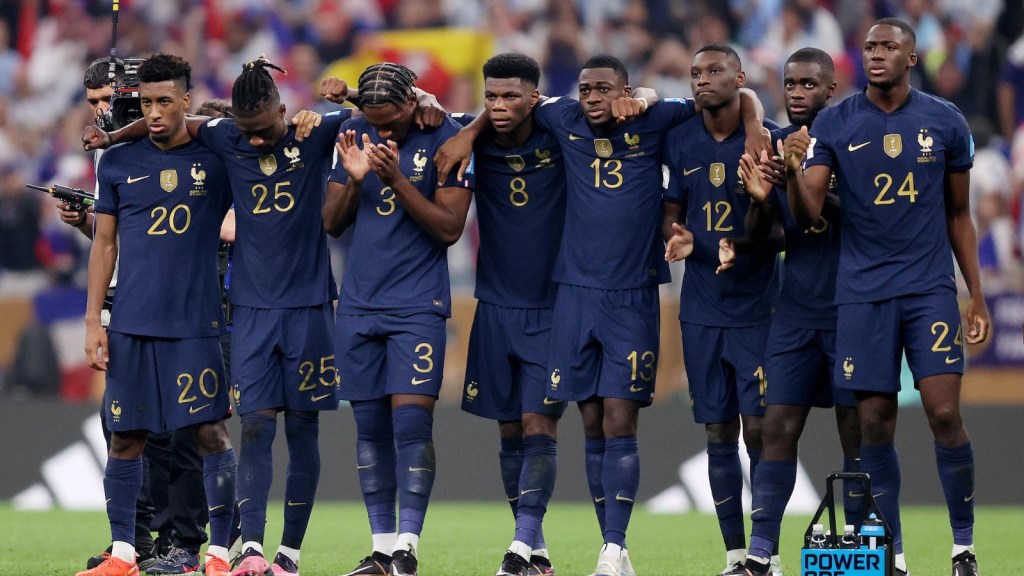
This issue of identity and belonging can be illustrated by the 2022 FIFA World Cup. During the FIFA World Cup 2022, the national team of France showed an excellent performance, where they reached the final stage and lost against Argentina on the penalties (FIFA, 2024). The France squad, which included players from diverse ethnic and cultural backgrounds, reflected the multicultural nature of modern football. However, during the world cup, having diverse ethnic players created debates in society. Some fans have debated whether certain players truly represent the national team, particularly due to their diverse cultural and ethnic backgrounds. In which, online posts and comments were a key player in intensifying this debate. In some extreme cases, these debates can cross the line and reflect underlying racial tensions.
Nowadays, these issues do not only remain among society, but reach global audiences rapidly due to social media. Tweets and instant comments catch attention instantly, and the developed algorithm mechanism boosts the visibility of these contents, often allowing these racial slurs to become more visible and reach a global audience. In some cases, this can lead to harmful behaviour such as online abuse. This issue can be explained through the case analysis of racism in the Euro 2020’s tournament. In the Euro 2020 tournament, England reached the finals however, the performance of the team was being criticised online. Fans argued that even though the team was the most expensive national team ever, they performed below average. After losing against Italy in the finals, with a result of 4-2 in penalties, the players who missed the three penalties for England faced intense criticism online. The criticism’s over: Bukayo Saka, Marcus Rashford and Jadon Sancho, three black England players, quickly escalated into racist abuse (Sullivan, 2021). These racist comments became so extreme that 11 individuals who wrote some of the comments were arrested as part of the hate crime investigation (BBC News, 2021). Even though this case highlights the negative side of social media in sport, it also proves that social media allows opinions to spread rapidly, also resulting in an increased support against social issues. In the case of England, the comments and abuse became so visible that some people were arrested.
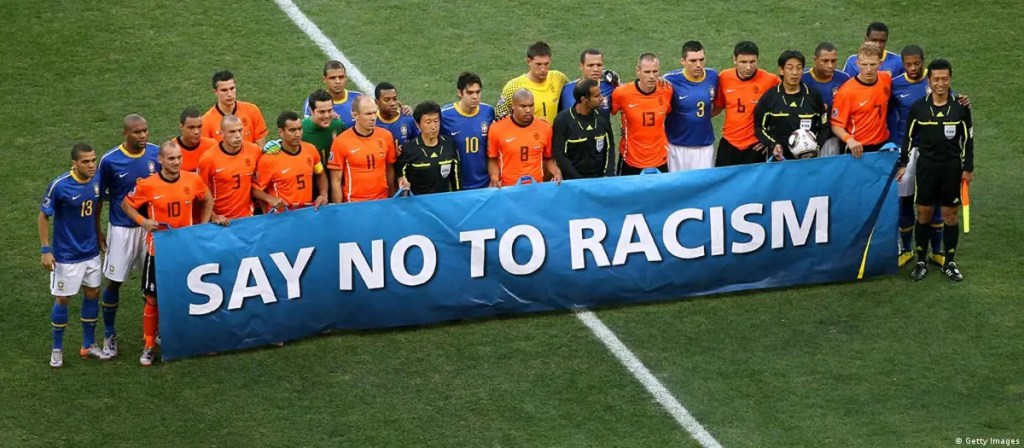
In conclusion, the rise of social media in sports in the last decade has brought light to certain social issues. The two cases: Discrimination that many French players faced during the 2022 FIFA World Cup and the racism the three English players faced highlights how social issues in sports can be visible and spread instantly to global audiences with the development and collaboration of social media and sports.
Reference List
Lee, J. (2021) Euro 2020 racist abuse: 11 people arrested. BBC News. Available at: https://www.bbc.com/news/uk-58094408
(Accessed: 8 April 2026).
Rowe, D. (2004) Sport, culture and the media: The unruly trinity. 2nd edn. Maidenhead: Open University Press. Available at: https://repository.bbg.ac.id/bitstream/608/1/Sport_Culture_and_The_Media.pdf
(Accessed: 8 April 2026).
Schachter, E.P. and Rich, Y. (2011) ‘Identity education: A conceptual framework for educational researchers and practitioners’, Educational Psychologist, 46(4), pp. 222–238. Available at: https://doi.org/10.1080/00461520.2011.614509
(Accessed: 8 April 2026).
Kian, E.M. and Hardin, M. (2009) ‘Framing of sport coverage based on the sex of sport writers: Female journalists counter traditional gendering of media coverage’, International Journal of Sport Communication, 2(2), pp. 185–204. Available at: https://journals.humankinetics.com/view/journals/ijsc/12/2/article-p185.xml
(Accessed: 8 April 2026).
FIFA (2024) Argentina v France: Greatest games – FIFA World Cup Qatar 2022. Available at: https://www.fifa.com/en/tournaments/mens/worldcup/articles/argentina-france-2022-final-greatest-games
(Accessed: 8 April 2026).
Sullivan, B. (2021) Three Black soccer players are facing racist abuse after England’s Euro 2020 defeat. NPR. Available at: https://www.npr.org/2021/07/12/1015239599/prince-william-and-boris-johnson-denounce-the-racist-abuse-of-englands-soccer-te
(Accessed: 8 April 2026).
BBC News (2021) Euro 2020 racist abuse: 11 people arrested. Available at: https://www.bbc.com/news/uk-58094408
(Accessed: 8 April 2026).
 sportsmarketingblog141.org
Leave a comment